Hydra Neo
- Role
- Landing page, identity, app icon and emails
- Since
- November 2026
- Status
- In development, early access
- Result
- 3,000 waitlist sign-ups in 24 hours
A rewrite has to earn the switch.
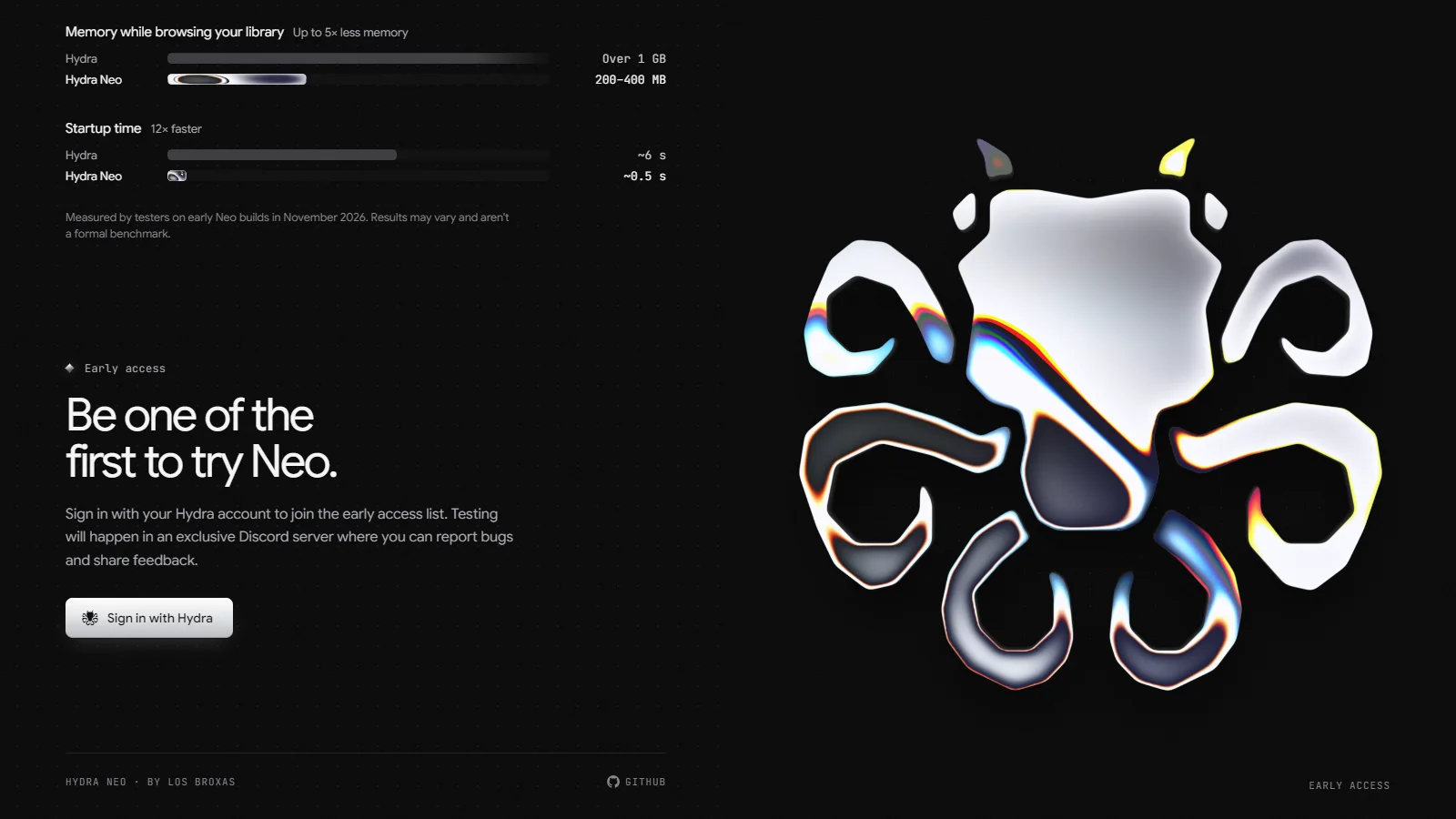
Hydra Neo is the launcher rebuilt from scratch in Rust as a native app. Today's Hydra carries a whole web browser inside it, and that browser stays in memory while you play. Neo drops it and draws straight on the graphics card. Engineering can make that true; my job was to make people want it before a single build existed. I designed the early-access launch end to end: the landing page, the liquid metal identity it runs on, the app icon and the waitlist emails.
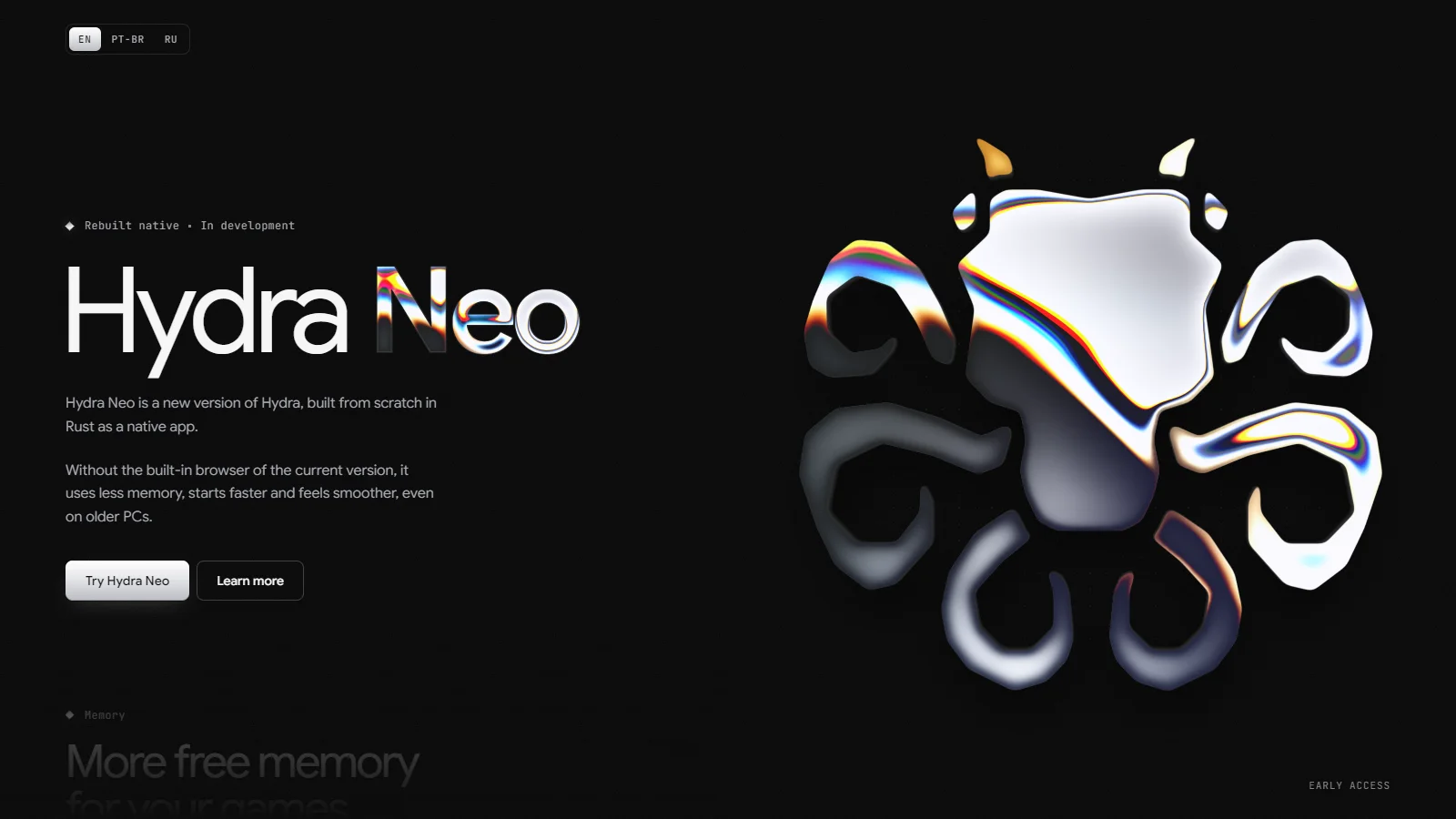
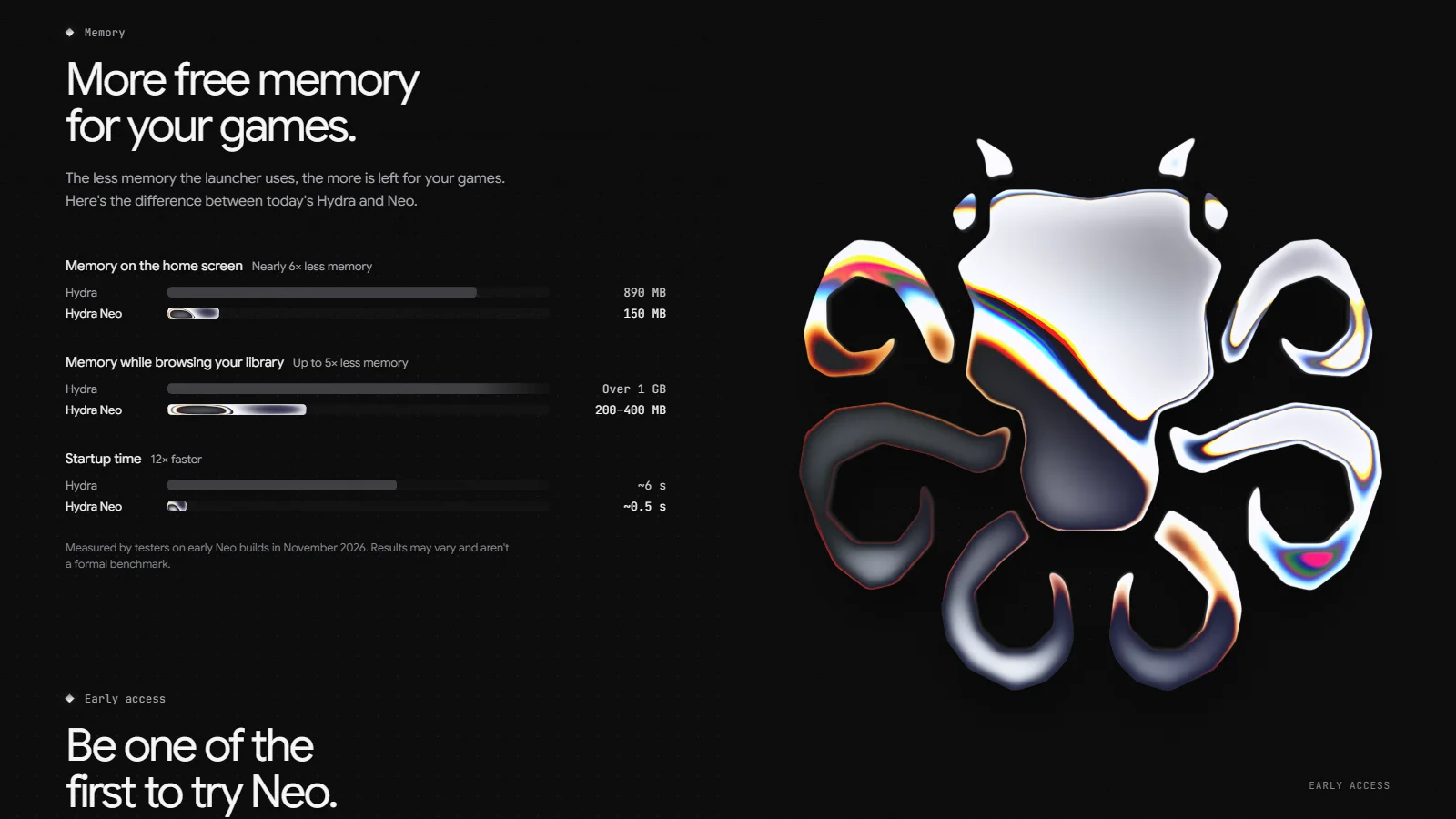
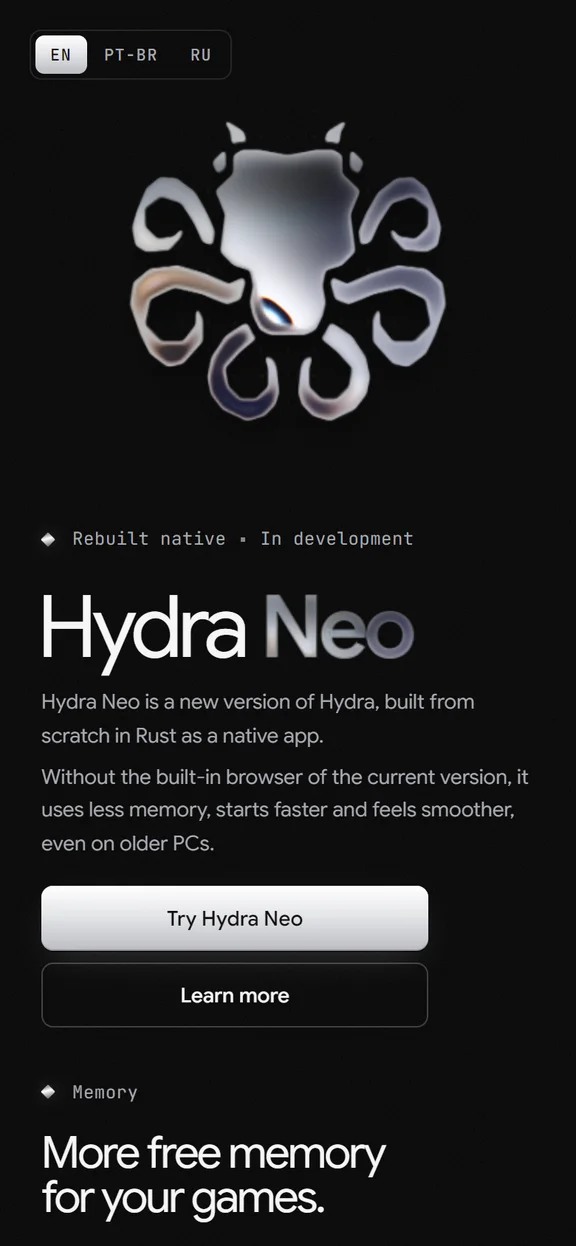
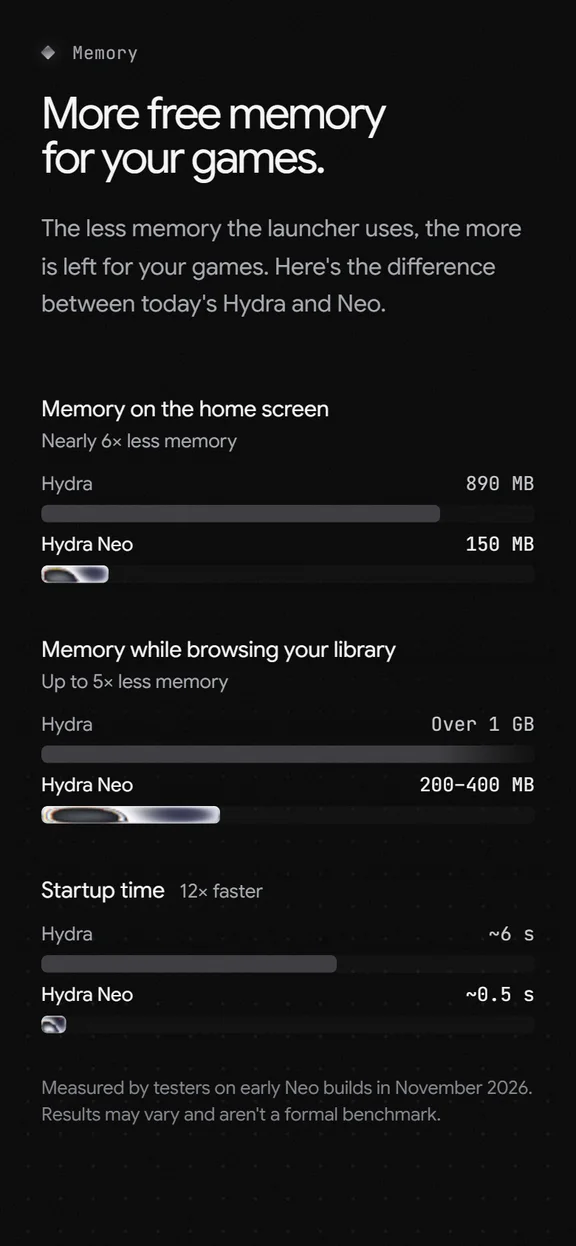
One page, one argument: memory.
A launcher's real competitor is the game it launches, so the page makes a single case: whatever Hydra holds on to, your game can't use. The copy explains RAM in a sentence, for players who never had to think about it, and then shows it in three bars measured by testers on early builds: 890 MB down to 150 MB on the home screen, up to 5× less while browsing the library, and about 0.5 seconds to open instead of 6. Today's Hydra gets flat grey; only Neo's bars are metal. The page is a split layout, copy scrolling on the left and the mark pinned on the right, and it ships in English, Portuguese and Russian.
A new engine deserved a new material.
Neo needed to look unmistakably like Hydra and unmistakably new. Instead of a new logo, it got a new material: the existing mark rendered as moving chrome with Paper's LiquidMetal shader. Every metal surface, the logo, the word Neo, the bars and the icons, runs the same standard preset; only the shape it is given changes. The details took the longest. The mark has its corners softened and a 16-layer extruded back, so it reads as an object when it tilts. Paper centres its light on the thickest part of a shape, which put a bright bullseye on the corner of the N, so a hidden circle under the word moves the light where it belongs. A faint outline keeps Neo readable between passes of the shine, motion turns off for reduced-motion users, and a fallback shader stands in if Paper fails to load. I documented all of it in a spec, so each surface can be rebuilt exactly.
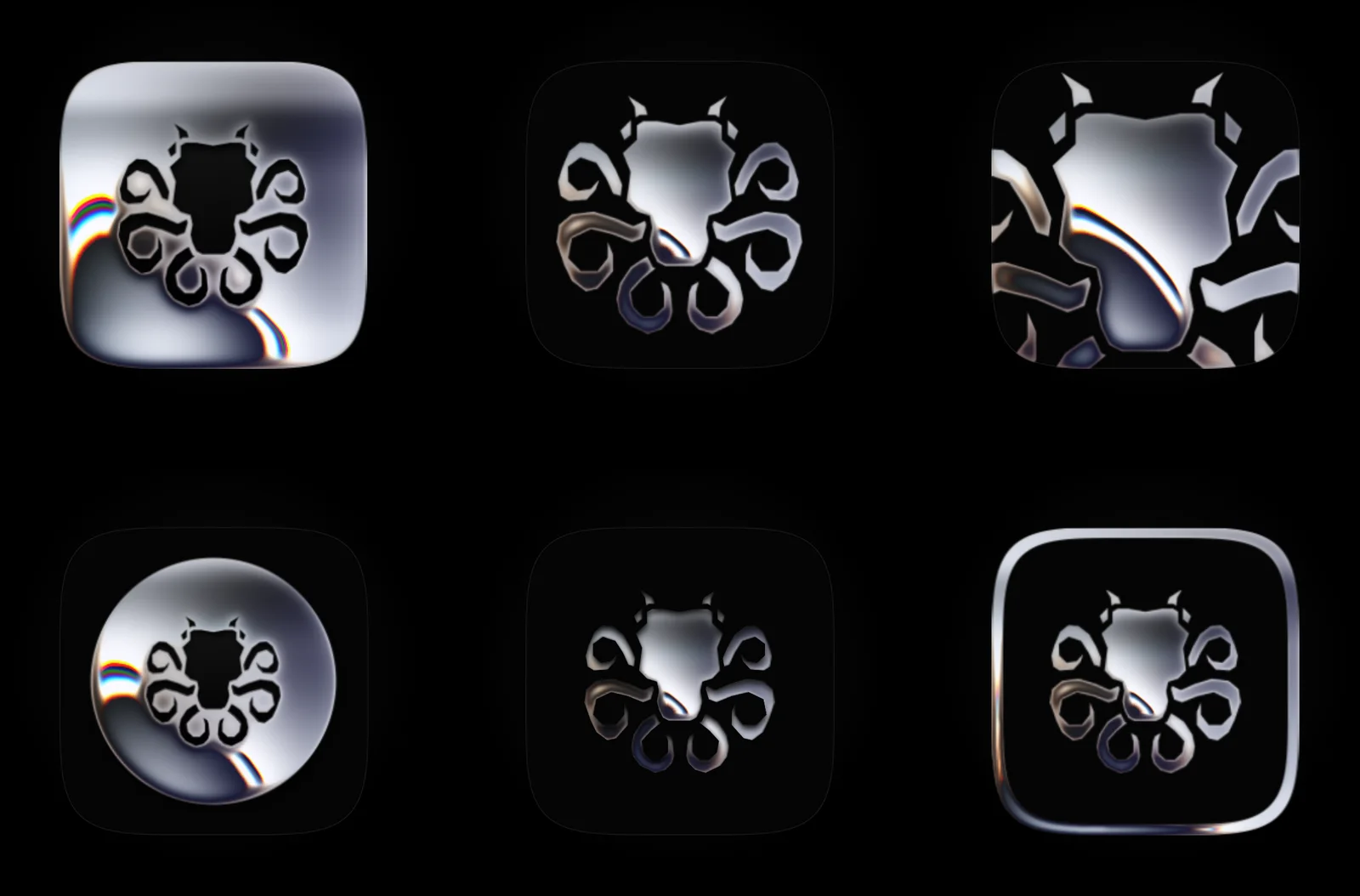
Six ways to put chrome on a tile.
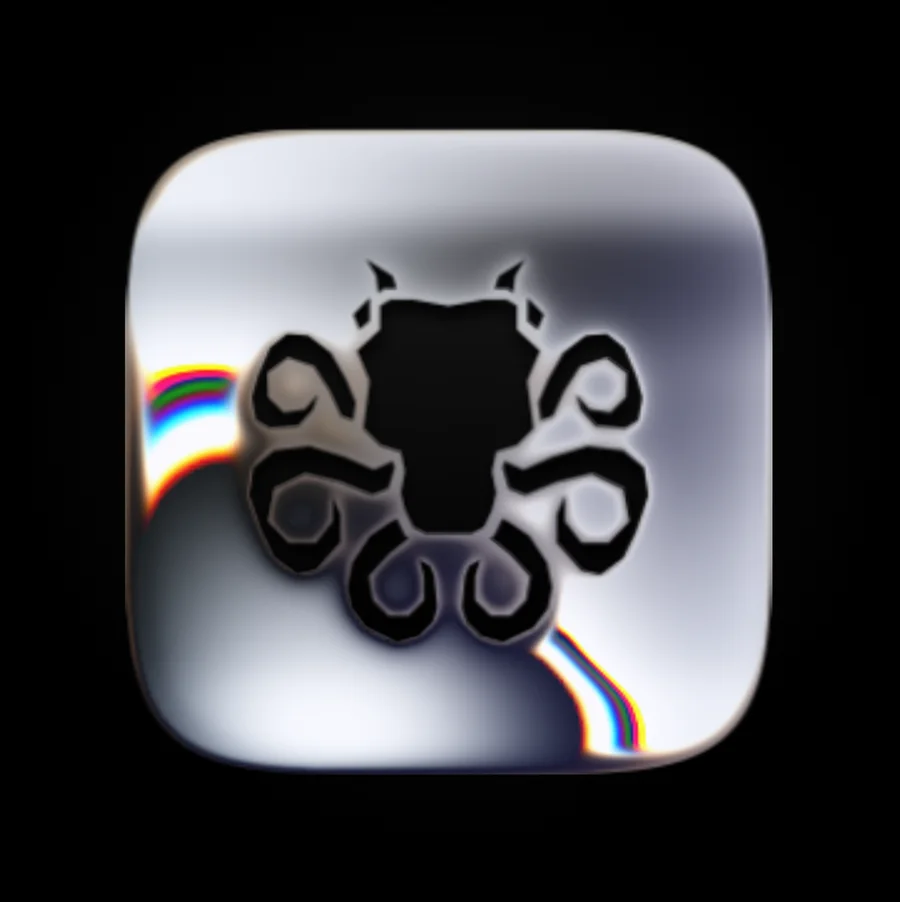
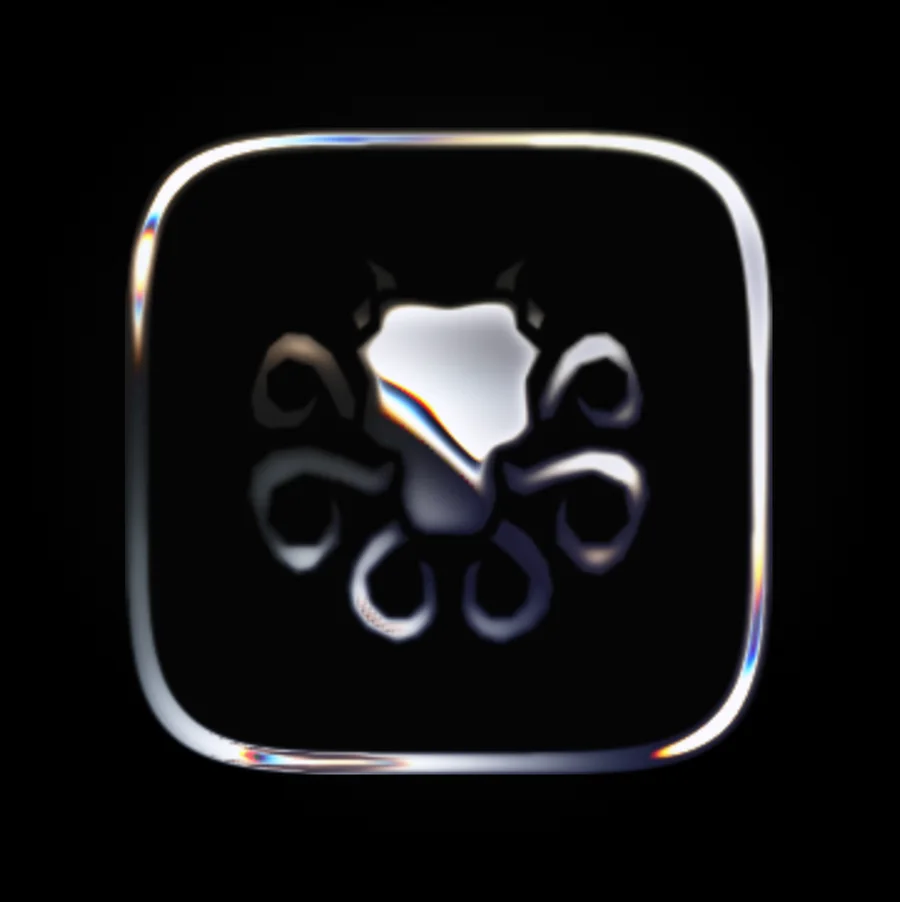
The icon had to carry the material without turning to grey mush at 16 pixels in a taskbar. I explored six directions, all rendered live with the same shader: carved through a metal plate, a bold mark on black, a close crop, a medallion, an inlay, and black glass with a chrome bezel. Each was checked at 120, 60 and 40 pixels before choosing. Carved and the bezel went forward. Because the shader never stops moving, each icon is pinned to one repeatable frame of it, 2.84 and 3.60 seconds, then exported at every size Windows, macOS and Linux ask for.
3,000 people on the list in a day.
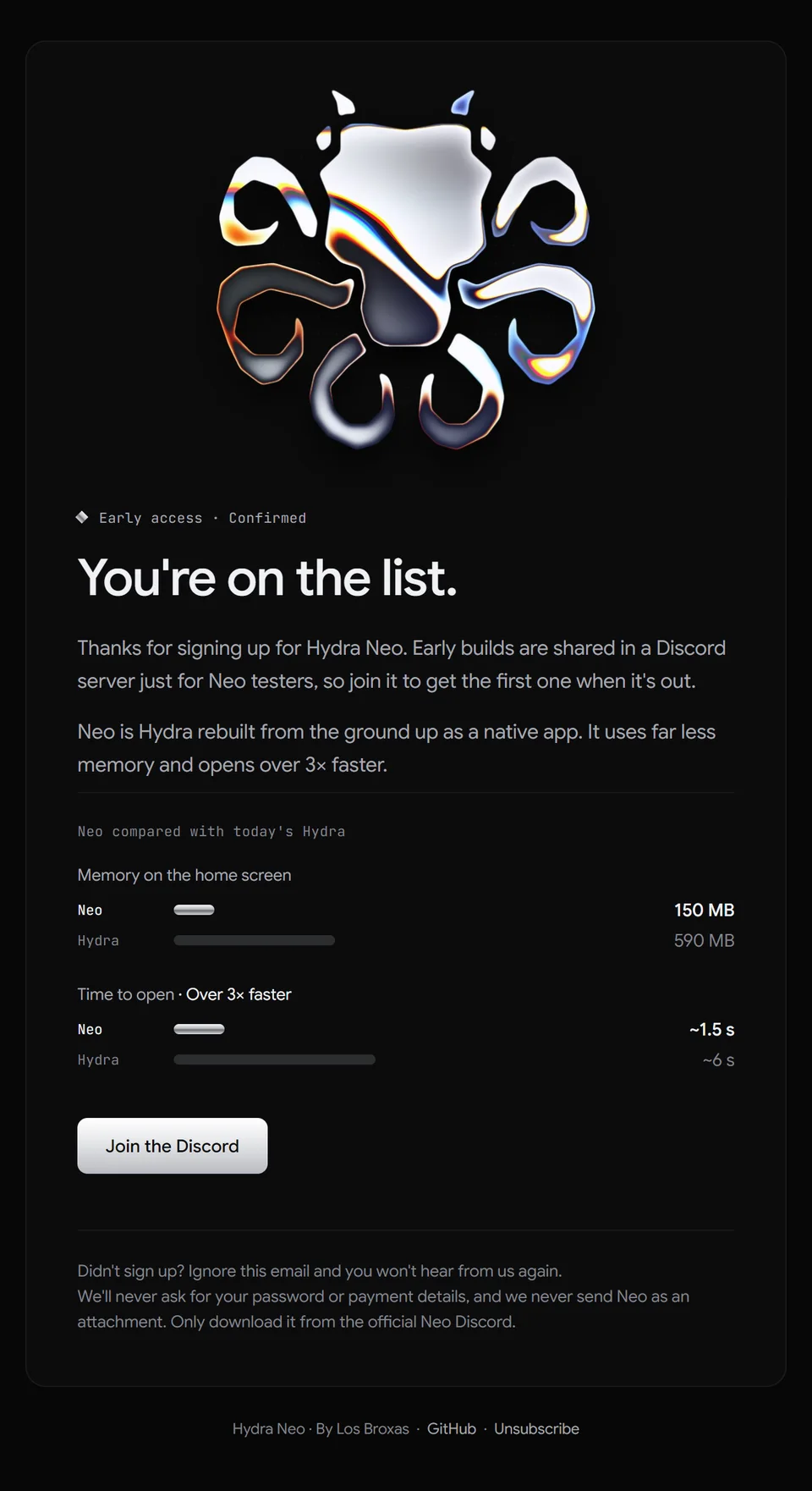
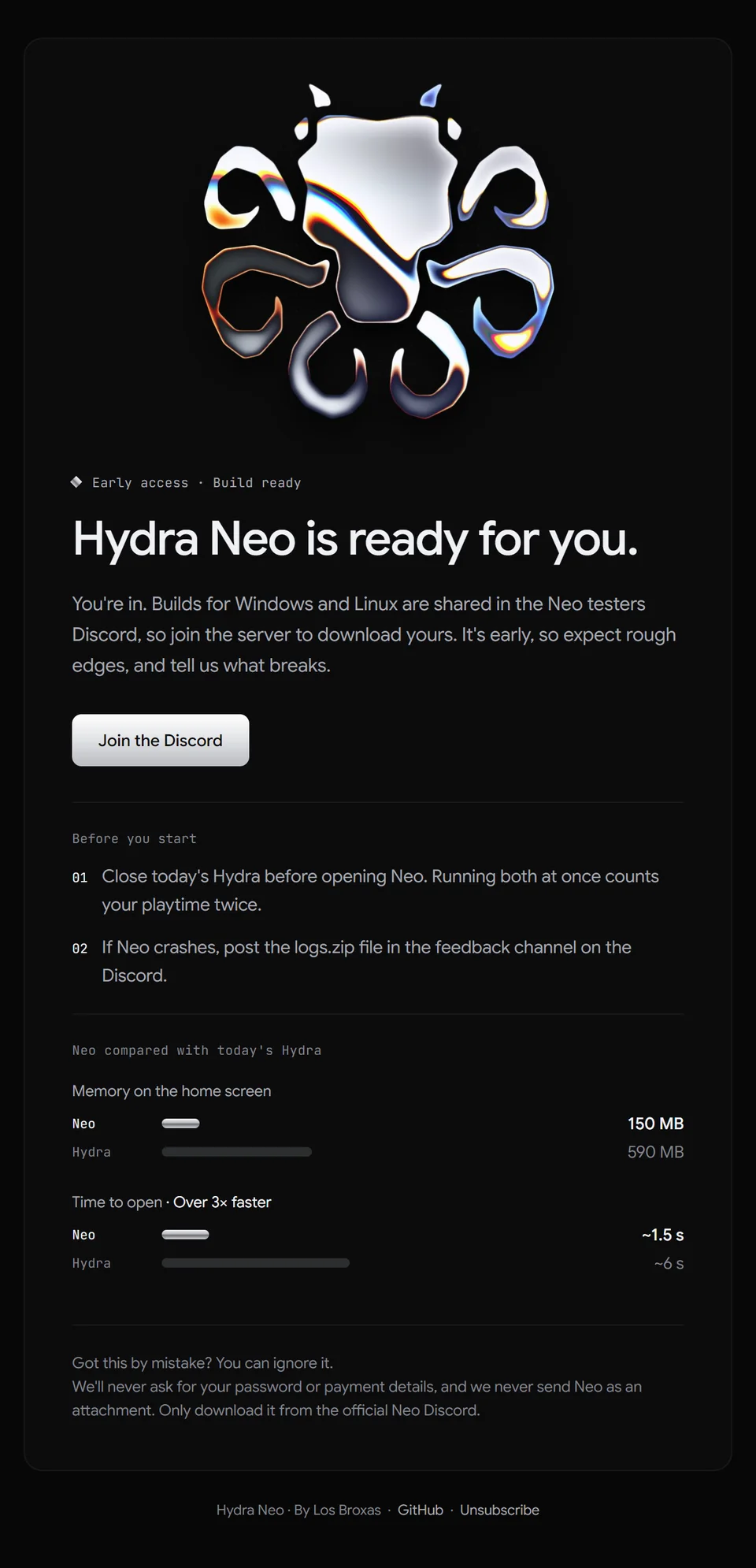
Signing up is the last step on the page and the first step of a longer relationship, so I designed what happens after it too. Two emails, one confirming the sign-up and one when a build is ready, in all three languages. Mail clients can't run a shader, so the header is a still frame of the landing's logo with the background baked in, and the layout is table-based with inline styles so it holds up in Gmail, Outlook and Apple Mail. The access email says what testers need before they start: close today's Hydra first or playtime counts twice, and post the logs file if Neo crashes. Both end with a safety line, because a popular launcher attracts fakes: Neo is never sent as an attachment, only through the official Discord. The waitlist reached 3,000 subscribers in its first 24 hours.
Sell the difference you can measure.
A rewrite is invisible on day one: same library, same games. What made people sign up was a difference they could check, so the page leads with numbers and labels them honestly as early tester readings, not a benchmark. The other lesson was about craft at scale. One shader across five surfaces only stays consistent if the settings are written down, so the spec became as much a deliverable as the page.